Enseignants
The teaching team of the MITRA Master's degree
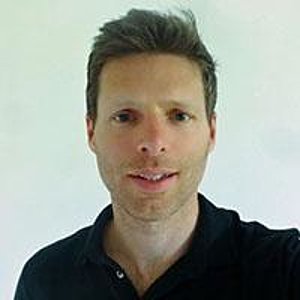
NICOLAS MARTIN-BRETEAU
Université de Lille
Nicolas Martin-Breteau is a historian specializing in the United States, a lecturer at the University of Lille, and a member of the Center for Administrative, Political, and Social Studies and Research (CERAPS). His research focuses on African American history and, more broadly, the history of racism in the Atlantic region. He has directed the Erasmus Mundus MITRA master’s program since 2020.
Nicolas Martin-Breteau is the author of Corps politiques. Le sport dans les luttes des Noirs américains pour l’égalité depuis la fin du XIXe siècle (EHESS, 2020). This book was published in the United States under the title Frontline Bodies. Sports and Black Struggles for Justice since the Late Nineteenth Century (Johns Hopkins University Press, 2024) and was the recipient of the French Voices Award. He is the translator of W. E. B. Du Bois’s The Philadelphia Negro (La Découverte, 2019) and serves on the editorial board of the journals Esclavages & Post-Esclavages and Critique internationale. He directs the projet ANR TACTICS on the long history of transatlantic anti-racism, co-leads the seminar "Antiracismes et sciences sociales" and is currently working on the magazine The Crisis, edited by W. E. B. Du Bois between 1910 and 1934.
For more information, see pro.univ-lille.fr/5511
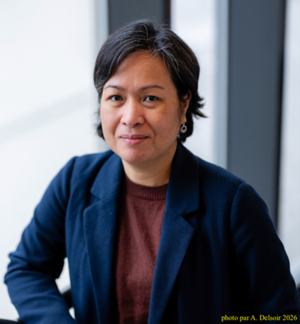
ASUNCION FRESNOZA-FLOT
Université Libre de Bruxelles
Asuncion Fresnoza-Flot has been a lecturer at the Université Libre de Bruxelles (ULB) in Belgium since October 2026. Prior to her academic return, she served as a senior researcher with the Scientific Research Fund (F.R.S.-FNRS) for nine years (Oct. 2017–Sept. 2026).
She holds three master’s degrees: in anthropology (Asian studies) from the University of the Philippines–Diliman in the Philippines, in sociology from Ryukyus University in Japan, and in socio-anthropology (DEA in migration and interethnic relations) from Paris 7–Paris Diderot University in France, where she earned her Ph.D. in sociology in 2008.
Since 2018, she has coordinated the Erasmus Mundus Master’s program “Transnational Migrations” (MITRA) at ULB.
She also serves on the editorial boards of three journals: Civilisations (an international journal of anthropology and the humanities), Revue de l’Institut de Sociologie, and Sextant (a multidisciplinary, international journal specializing in gender and sexuality studies). Her research focuses on the following themes: family, gender, migration, and mobility.
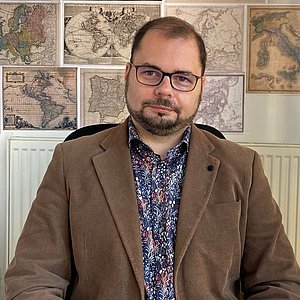
SERGIU MISCOIU
Université Babeș-Bolyai
Sergiu Mişcoiu is a university professor in political science at the Faculty of European Studies of Babes-Bolyai University (UBB, Cluj-Napoca, Romania) and director of the Centre for International Cooperation of this university.
In 2006, he obtained a PhD in political science (at the University of Paris-Est) and a PhD in history (at the University Babes-Bolyai) for a thesis on national construction in Europe. Since October 2010, he has been authorized to supervise research (HDR) in political science at the University of Paris-Est and Babes-Bolyai University; his habilitation thesis focused on populism as understood through discourse theory.
He is also a member of the research team at the Interdisciplinary Laboratory for the Study of Politics (LIPHA) at the University of Paris-Est Créteil, director of the Center for Academic Success and the Center for African Studies at Babes-Bolyai University, director of the Master’s program in Comparative European Political Studies (MITRA-UBB), editor-in-chief of the academic journal Studia Europaea, chair of the Political Science and International Relations Committee of the National Council for University Degrees (CNATCDU), expert for the National Council for Scientific Research (CNCS), and expert evaluator for the European Commission. He is a member of the Scientific Experts Commission of the Francophone University Agency (DRECO) and an Officer of the Order of Academic Palms.
His research focuses on theories of populism, radicalism, and extremism, as well as political transitions in Central and Eastern European countries and Francophone Africa, approached from a comparative perspective. He has authored four books, edited and co-edited 24 other volumes, and written and co-written 170 other chapters and scholarly articles.
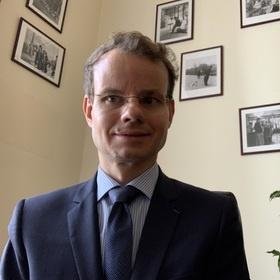
PÉTER PÁL KRUZSLICZ
Károli Gáspár University
Péter Pál Kruzslicz is a senior lecturer at the Faculty of Law and Political Sciences (International and Regional Studies Institute) of the University of Szeged, he is director of French-speaking study programmes at the same faculty and director of the Francophone University Centre of the same University.
He got a legal degree (dr. jur.) at the University of Szeged and a Master in European law at the University Jean Moulin Lyon 3. He followed his doctoral studies at those two universities, and he got a PhD degree in public law. He works at the University of Szeged as a lecturer, researcher, and he has several administrative responsibilities, especially as regards to the development of international relations of the University. He teaches lectures in comparative constitutional law and European law for Master students in Hungarian, English, and French. His research is conducted on the field of intersection of the constitutional and European law (national sovereignty, constitutional identity, the relations between national and European law), he has been interested on migration related legal issues for the last five years with regard to his initial subject of interest, he is also working for the last couple of years about institutional questions, especially democratic challenges in contemporary States in Central Europe and in the institutional and legal system of European integration. He is involved in numerous international research projects and publishes in Hungarian, in French and in English.
ESZTER BALOGH
Károli Gáspár University
Dr. Eszter Balogh is a sociologist, associate professor at Károli Gáspár Reformed University, and a migration researcher. Her research focuses on the integration, labor market situation, career paths, and identity processes of Hungarians living in Austria and Germany. As research director of the KRE Migration Research Group, she has led several empirical projects, particularly on the labor market and social integration of highly educated Hungarian women in Vienna.
Key publications on migration
- Eszter Balogh – Fruzsina Réka Mikó – Márton Tamás Csanády (2022): Career Benefit Dilemmas: Opportunities for Hungarian Women in the Austrian Labor Market.
- Judit T. Nagy et al. (2023): Digital possibilities for measuring emigration in statistics.
- T. Nagy et al. (2025): A method for measuring the career trajectories of migrants: the career benefit index.
- T. Nagy et al. (2025): The relationship between migration background and career benefits in the lives of Hungarian mobile workers in German-speaking countries.
- Balogh et al. (2026): Perceived Expressive Reduction in German: Identity, Affect, and Social Relations among Highly Educated Hungarian Migrant Women in Vienna.
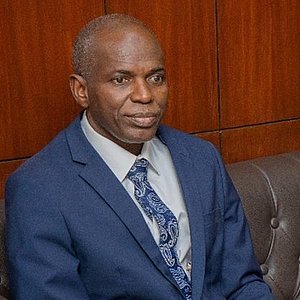
MAMADOU BOUNA TIMERA
Université Cheikh Anta Diop de Dakar
Mamadou Bouna TIMERA is a Full Professor of Geography in the Faculty of Arts and Humanities (FLSH) at Cheikh Anta Diop University of Dakar (UCAD).
Graduated from Cheikh Anta Diop University in Dakar, Paris Sorbonne University, and Paris 7 Denis Diderot University, he is a specialist in geography and the didactics of geography, with a focus on human geography and educational issues. His research focuses on academic knowledge and issues of identity, territorial construction, and spatial change.
He served as head of the geography department from 2012 to 2014 and again from 2018 to 2019, and as director of the human geography laboratory from 2021 to 2023. A Member of Senegal's National Border Management Commission for over ten years, he shares his experience in border management within the West African context as part of the MITRA Master's program, which he coordinates at UCAD, and leads an annual seminar in Cluj, Romania, on: “The State and Borders in Africa: The Case of Senegal and Its Neighbors.”
After serving as an assessor at the Faculty of Letters, Sciences, and Humanities (FLSH) from 2019 to 2025, he currently holds the position of Acting Dean. He is also Inspector General of Education and Training (IGEF) at the Ministry of National Education. His latest book, titled “Decolonization of Knowledge, Africanization of Geography: In the Footsteps of Cheikh Ba,” was published by Presses universitaires de Dakar in 2026.
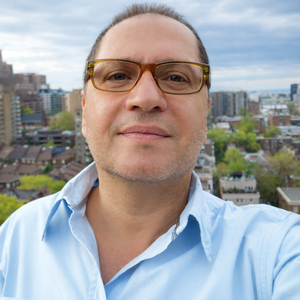
MOHAMMED ELHAJJI
Federal University of Rio de Janeiro
Mohammed ElHajji is a Full Professor at the Federal University of Rio de Janeiro, where he teaches in the doctoral programs in Communication and Social Psychology. As a Research Director at the CNPQ (Brazilian National Center for Scientific Research), he has supervised more than 20 doctoral dissertations on the topic of migration. He is the coordinator of Diaspotics—a research group on transnational migration and intercultural communication—and of the Symposium on Transnational Migration Research.
His work can be found at: mohahajji.academia.edu
PANAGIOTIS GRIGORIOU
University of Aegean
Panos Grigoriou is a lawyer and professor of European and International Institutions at the University of the Aegean. He is an adjunct professor at the University of Luxembourg (Parliamentary Studies). In 2022, he was named an Officer of the Order of Academic Palms by the French government. From 2014 to 2017, he served as Dean of the Faculty of Social Sciences at his university. He founded two master’s programs at the University of the Aegean: Management of Refugee and Migratory Flows in Europe (2022) and European Integration and European Societies (2008). Since 2013, he has directed Europe Direct for the Northern Aegean (European Information Regional Network). He edits the series European Public Space—Law & Politics (Eurasia Publications, Athens).
His recent publications include: European Memory, Eurasia, Athens, 2025; Citizen Europe, Eurasia, Athens, 2024; Studying Europe, Eurasia, Athens, 2024; International Law through the Institutional Evolution of the European Union. New Concepts for the International and European Legal Orders, Kallipos Publications, DOI: dx.doi.org/10.57713/kallipos-385; Handle: hdl.handle.net/11419/11508
CEM ÖZATALAY
Galatasaray University
Cem Özatalay is an associate professor in the Department of Sociology at Galatasaray University. His research focuses on the economic sociology of capitalism, power relations at the intersection of social classes and identities, the informal sector, social rights and inclusion, as well as the dynamics of authoritarianism and exile.
He is actively involved in Euro-Mediterranean academic networks and international research projects dedicated to changes in labor and social structure.
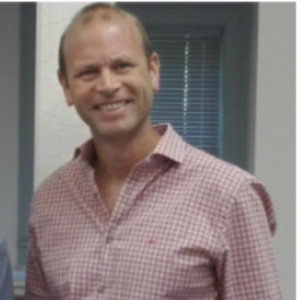
MAXIMILIANO RITACCO REAL
University of Granada
Maximiliano Ritacco Real is a Full Professor at the University of Granada and holds a PhD in Education from the same university. His research focuses on the processes of neoliberalization in education, school management and leadership, and teachers' professional identity. Professor Ritacco has participated in national and international research projects and has undertaken long-term research stays in the USA, Cyprus, and Argentina.
In university management, Professor Ritacco is currently the coordinator of the Master's program in Research, Social Development, and Socio-educational Intervention and the Bachelor's degree in Social Education, as well as the local coordinator at the University of Granada for the Erasmus Mundus Master's program in Transnational Migration. His publications are available at https://scholar.google.es/citations?user=RnliEi4AAAAJ&hl=es
PAWEL CZAJKOWSKI
University of Wroclaw
Paweł Czajkowski, PhD, is an Assistant Professor at the Institute of Sociology, University of Wrocław, affiliated with the Department of Sociology of Gender and Family. His research focuses on the sociology of family, masculinities and fatherhood, social dimensions of sexuality and corporeality, collective memory, and local identities in post-migration societies. He has extensive experience in qualitative and comparative research.
He has participated in several international research projects, including “The Memory of Vanished Population Groups in Today’s East- and Central European Urban Environment” (2010–2014), the NCN Beethoven project “Jews and Germans in Polish Collective Memory” (2016–2019), and the international project VULNERAGE – Quality of Life of Older People with Dementia and INTERACT (2025–2028), conducted in cooperation with Université de Lille. He is currently involved in the NCN Weave-Unisono project comparing three generations of fathers in Poland and Germany (2024–2027).
His publications address collective memory, urban identities, ageing and vulnerability, as well as changing models of fatherhood and masculinity. He teaches courses in English within the Intercultural Mediation programme, including Globalisation and Social Change and Space and Place. He also serves as Deputy Editor-in-Chief of the journal Fabrica Societatis and as MITRA exchange programme coordinator at the University of Wrocław.
- Czajkowski, P. (2025). How Towns Remember: Jews in Dzierżoniów, Germans in Racibórz after 1945. Warsaw: Scholar Publishing.
- Czajkowski, P. (2023). Memory, identity and post-migration urban communities in contemporary Poland. Journal of Soviet and Post-Soviet Politics and Society.
- Czajkowski, P., et al. (2022). Quality of life and vulnerability among older people with dementia in Europe. Age and Ageing.
- Czajkowski, P. (2021). Collective memory and local identity in post-war Lower Silesia. Fabrica Societatis.
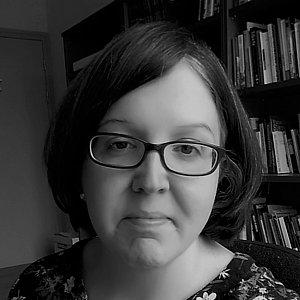
KATE HODGSON
University of Cork
Kate Hodgson is Director of Graduate Studies in Languages, Literatures, and Cultures at the University of Cork (UCC), where she co-directs a research center on memory, commemoration, and the uses of the past. Her publications include Memory, Mobility & Material Culture (Routledge, 2022) and Maryse Condé and Caribbean Crossings (LUP, 2026).
She is a specialist in Haitian culture and literature, and her research focuses on postcolonial memory, diasporas, mobility, and the legacies of slavery in the Caribbean. She is interested in cultural heritage (including oral and material cultures), community, and the uses of the past in the present.
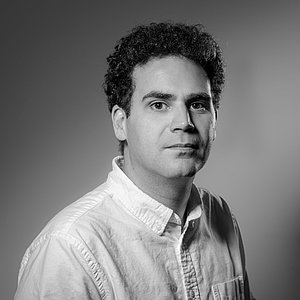
SINAN RICHARDS
University of Cork
Sinan Richards is a college lecturer at University College Cork and co-director of MITRA at UCC.
He is the author of Dialectics of Love in Sartre and Lacan (Palgrave, 2023), Co-editor of Understanding Lacan, Understanding Modernism, alongside Thomas Waller (Bloomsbury, 2025) and Fanon and Lacan: Decolonial Psychoanalysis, alongside Derek Hook (Routledge, 2026). Richards serves as a member of the French Studies editorial board and is a correspondent, associate, and referee at the European Journal of Psychoanalysis.
He is currently finalizing a new monograph on Fanon and Lacan to be published by the British Academy and Oxford University Press.